Rethinking Quick Commerce Summer Demand: Not Fast and Furious, but Fair and Responsible
This summer is a daily test of endurance for delivery riders since temperatures are soaring to over 40°C in most regions of India.
Anyone in politics has a greatly elevated moral obligation to perform his due diligence.





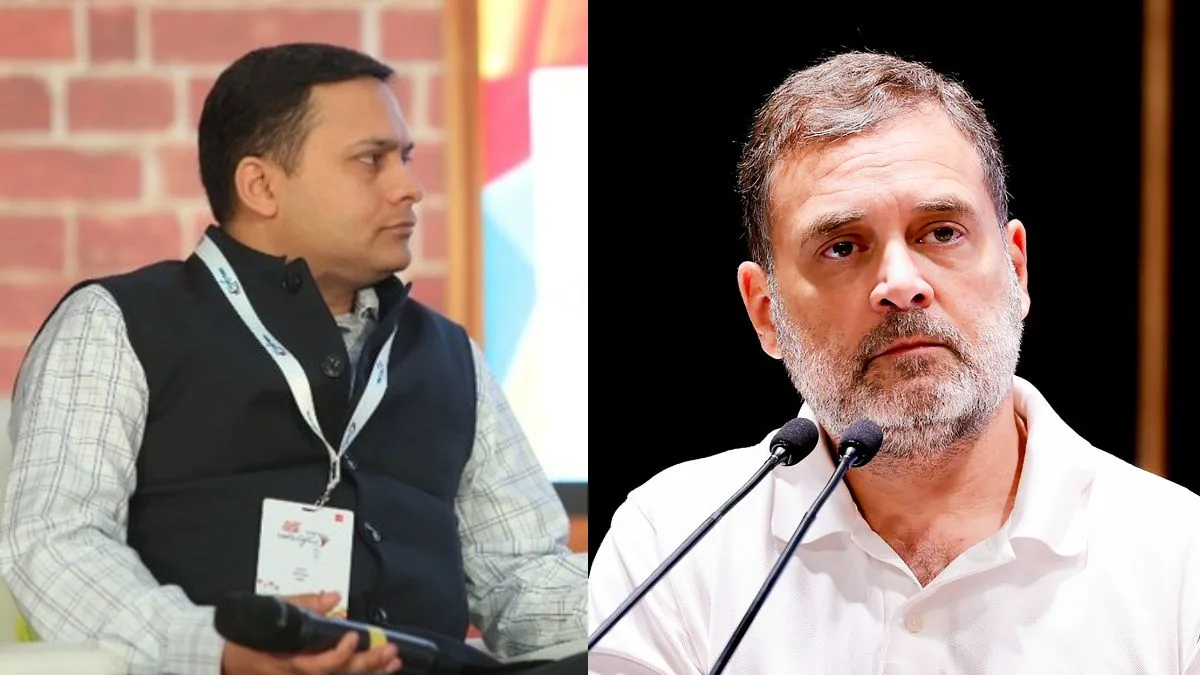
Image: IANS
Anyone in politics has a greatly elevated moral obligation to perform his due diligence. Common decency requires politicians to act with extreme moral trepidation at all times, ever mindful of the possibility that they may not trample the rights of the morally innocent. Sometimes, politicians are guilty of pervasive gross legal and moral negligence. Law treats equally, both politicians and non-politicians. But the scope of discretion is available to courts in the execution of laws.
It is difficult to deny that this discretion may be hit by a forceful public perception. However, it is difficult to claim that courts may be hesitant to use this discretion in favour of politicians under undue pressure of public opinion. Of course, a court does not discriminate between the politicians and non-politicians. However, it is observed that politicians as accused and convicted are deprived of their statutory rights being a politician or otherwise infamous. Courts are not influenced by the media trial at all, they go by the law, not perceptions of the public.
Advertisement
In some cases, there is such a public outrage where courts rarely use discretion in favour of a politician-accused than ordinarily is used in the favor of a common accused. Accidentally, if a decision of court looks alike to public perception, it appears that the court seems to succumb to public pressure created by the media that, of course, is not strictly true. For instance, in the Navjot Sidhu v. State of Punjab (2007) case, the Court held that Sidhu was convicted for an offence committed much prior to his entry into politics. He had resigned from his office immediately. He did not take benefit of clinging on to his office by merely filing an appeal.
Advertisement
The court a l s o observed that conviction of the appellant was liable to be suspended as he had chosen a moral path and set high standards of public life and if his conviction was not suspended, he would suffer irreparable damage. It clearly shows that if he may have been convicted for an offence committed after his entry into politics, he would not have got relief from the court. What is the law on the point? Under section 389, Criminal Procedure Code (now 430 of BNSS) an appellate court can exercise power to grant bail to a convicted person pending his appeal. It must be clarified that the Appellate Court has the power to suspend the sentence of the accused or its execution but does not have the power to suspend conviction.
In June 2017, a crime was committed against a 17-year-old girl, in Unnao district of Uttar Pradesh, one of the most horrific in India in recent years. Culprit (Kuldeep Singh Sengar) was sentenced to life imprisonment by a Delhi trial court in December 2019. Further, in March 2020, he was also found guilty of culpable homicide and criminal conspiracy in the victim father’s death. Sengar filed an appeal in the Delhi High Court. On 23 December 2025, the High Court suspended the life sentence and granted bail to Sengar pending appeal. Court granted bail according to law. The court directed the convict to furnish a personal bond with sureties of Rs 15 lakh and imposed harsh conditions, including remaining in Delhi, not approaching within a radius of five kilometers of the survivor’s residence, and refraining from contacting, intimidating, or influencing the survivor or her family during the pendency of the appeal.
The Unnao case survivor and her family had strongly opposed the High Court’s decision to grant bail to Sengar and there was a huge public outrage on the issue. The CBI filed a Special Leave Petition (SLP) before the Apex court against the High Court’s decision. Sengar was denied bail by the Hon’ble Supreme Court on 29 December 2025. The Supreme Court stayed the operation of the Delhi High Court order which had suspended the life sentence awarded to Sengar. Sengar was convicted for a heinous crime that cannot be equated with any other crime specifically the cases imposed out of politics of vendetta. Section 389 does not differentiate among the offences so far as the right to suspension of sentence and bail on appeal is concerned.
Senior Samajwadi Party leader Mohammad Azam Khan and his son Abdullah Azam were convicted on 17 November 2025 and sentenced to jail terms of up to seven years by a special MP/MLA magistrate court in a 2019 case related to obtaining two PAN cards using different dates of birth. Appeal was filed against this conviction in a special MP/MLA session court. Bail application was also filed under section 489 and the hearing of the appeal is in progress but without grant of bail. There is catena of cases where the Supreme Court in the light of section 389 took a liberal approach. Apex Court ruled that the appellate court may grant bail during the pendency of appeal under section 389 even without going into the merits of the case (Joginder Singh v. State of Punjab 1977).
The Supreme Court held the need for granting bail or suspension of sentence under section 389 and observed that that so long as the appellate court is not in a position to hear the appeal of the accused expeditiously, ordinarily convicted person should be released on bail unless there are cogent grounds for refusing the bail (Bhagwan Rama Shinde v. State of Gujrat, 1999). Recently, the High Court had ordered in the penultimate para that the “petitioner shall not approach this court before a minimum period of three years from the date of conviction” (Krishan Kumar v. State of Haryana 2022). In the instant case, the Supreme Court held that seeking relief of suspension of sentence and release on bail is a statutory right of the appellant and no appellant can be debarred from renewing his prayer for suspension of execution of sentence for a particular period.
It is for the court to grant such prayer but the law does not permit time-specific debarment. The Supreme Court annulled the observation of the High Court as it was contrary to the provision contained in Section 389, CrPC. While politics offers power and the potential for impact, the demerits are substantial and often outweigh the benefits for those not fully committed to the lifestyle. However, politicians should have the same rights after conviction or even as an accused as available to ordinary accused or convicted person.
(THE WRITER IS PROFESSOR, DEPARTMENT OF LAW, ALIGARH MUSLIM UNIVERSITY.)
Advertisement